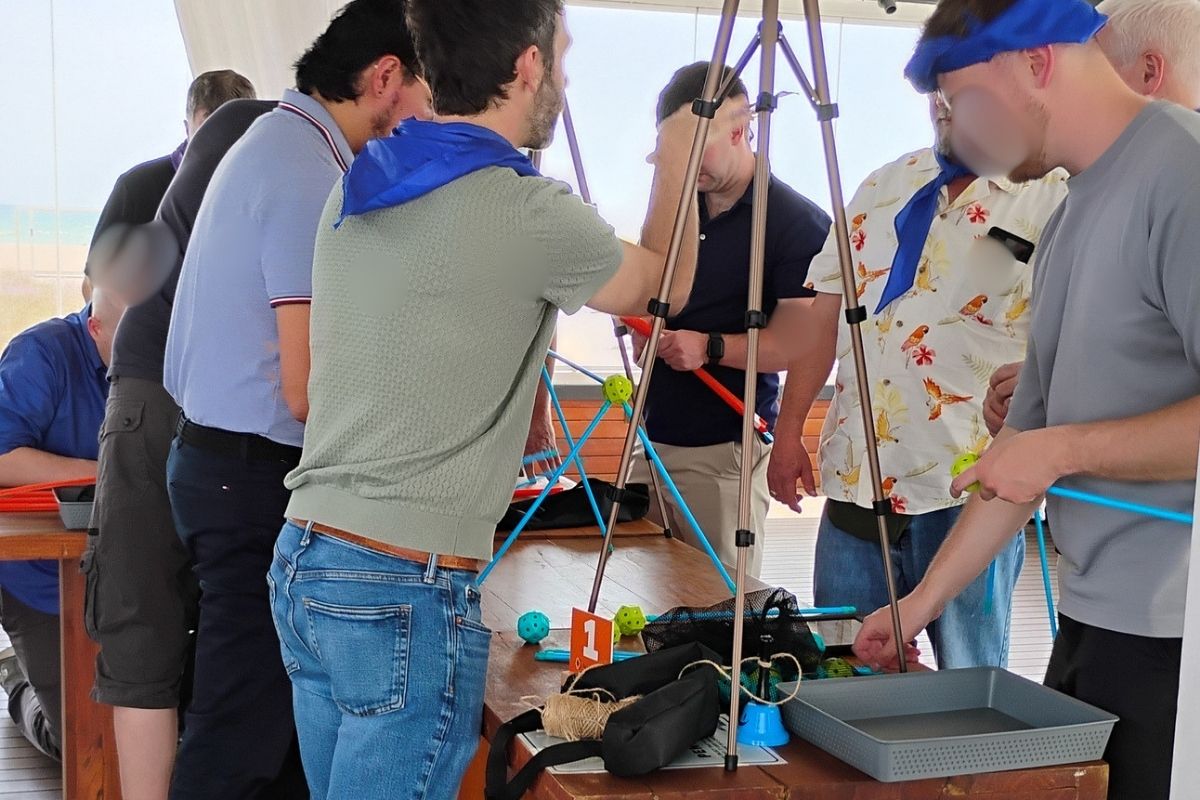
Corporate team building Spain covers a wide range of formats, destinations, and objectives. Choosing the right combination is what separates an afternoon people forget from a programme that changes how a team works together. This guide is for anyone planning corporate team building in Spain. It is written for HR leads choosing a destination for the first time, event managers comparing cities, and executive assistants preparing a proposal for approval. We cover the activity types that work best, the destinations where we deliver them, what a specialist partner handles on your behalf, and realistic budget and timing guidance.
Why Companies Invest in Corporate Team Building Spain
Engagement at work has been falling for years. Global employee engagement fell to just 20 percent in 2025, its lowest level since 2020, according to Gallup’s most recent State of the Global Workplace research. Gallup itself flags that level as a significant shift, not routine variation. A single offsite will not reverse a global trend on its own. It can still do real work at team level. Shared experiences outside email threads and status meetings build trust, and that trust speeds up decisions once everyone is back at their desks.
Spain adds a practical advantage on top of that psychological one. Strong flight connectivity puts Madrid, Barcelona, and several regional airports within easy reach of most of Europe. That matters when a team is scattered across several offices. The climate extends the outdoor season well beyond summer, and venue and activity costs remain competitive next to Northern European cities. The range of settings, from Mediterranean beaches to mountain villages, means a programme rarely has to compromise on budget or ambition. Spain now ranks among the world’s top three destinations for international congresses. That standing reflects the same infrastructure and hospitality culture that makes team building here so effective, according to recent tourism industry reporting.
Types of Team Building Activities in Spain
Team building activities in Spain fall into a handful of broad categories. The strongest programmes usually combine two or three rather than relying on a single format for a full day.
Culinary and Cultural Activities
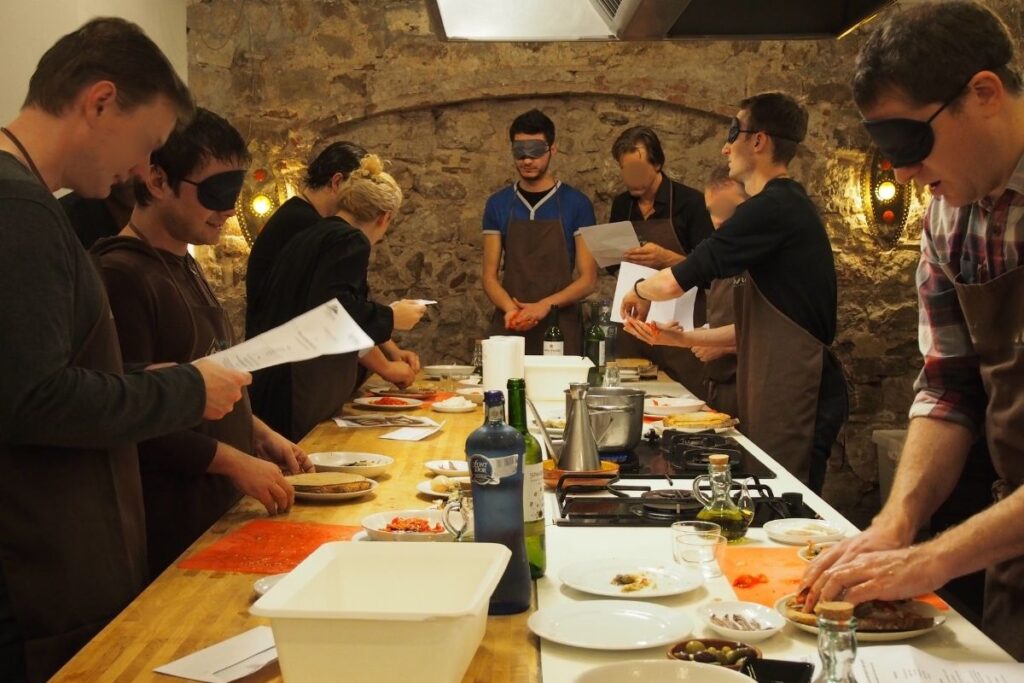
Cooking challenges, tapas crawls, and craft workshops rooted in local tradition work for almost any group. They need no special fitness, and they scale easily from ten people to several hundred. A paella cook-off or a wine-blending session forces genuine collaboration under a light-hearted deadline. The shared meal at the end does more for informal bonding than most structured icebreakers manage.
Outdoor and Adventure Activities
Hiking challenges, off-road driving, kayaking, and multi-stage treasure hunts suit groups looking for something more physical or competitive. These formats are particularly effective at breaking down office hierarchies. Job titles matter far less than who can read a map or stay calm under mild pressure.
Creative and Collaborative Workshops
Art, design, and craft-based sessions, from mosaic making to short-film challenges, ask teams to produce something tangible together. They work well for groups that want a slower, more reflective format. They are also a strong fit for teams pairing team building with a broader leadership or communication objective.
Water and Coastal Activities
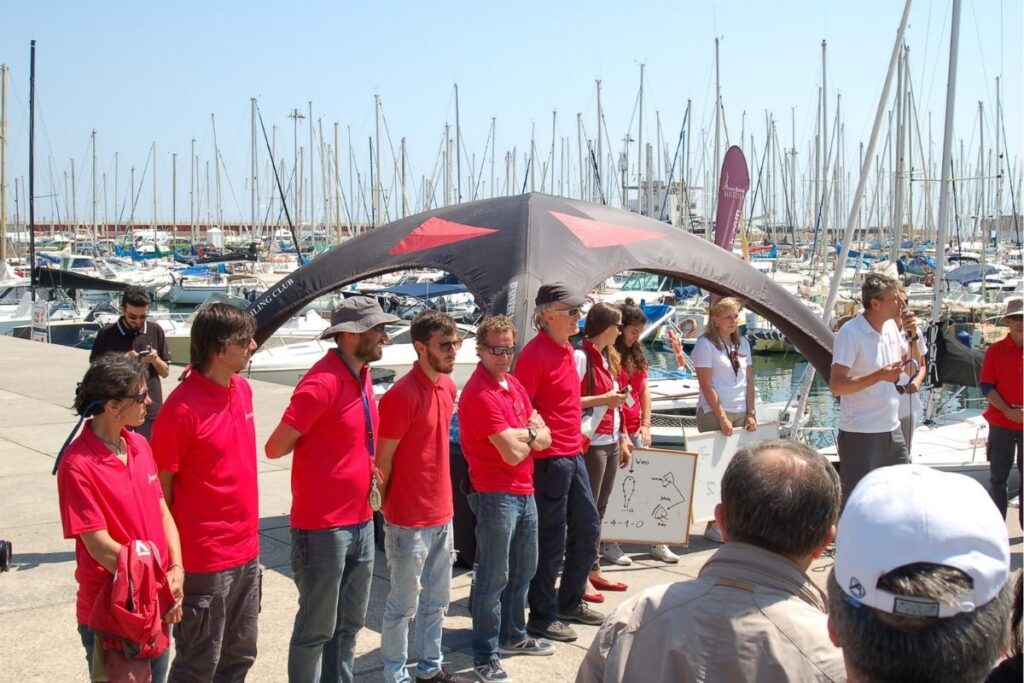
Spain has thousands of kilometres of Mediterranean and Atlantic coastline. That coastline supports sailing regattas, stand-up paddleboarding, and beach-based competitions that are hard to replicate inland. These activities lean on natural leadership, since conditions shift quickly and someone always has to make a call.
Matching the Activity to Your Team’s Situation
The right activity depends on why you are running the programme, not just on group size. A team that has just been through a merger needs something different from a sales team celebrating a strong quarter, and a group of senior leaders needs a different pace again from a large operational team.
Newly formed or merged teams usually benefit from activities that force genuine collaboration under light pressure, such as a cooking challenge or a treasure hunt. The goal is fast, low-stakes trust-building rather than competition for its own sake.
Leadership and executive groups often respond better to slower, more reflective formats, such as a creative workshop or a sailing regatta, where roles emerge naturally rather than being assigned. Smaller group sizes also allow more honest conversation.
Remote or hybrid teams meeting in person for the first time in months benefit from a full day rather than a single afternoon, so there is time to move from small talk to real connection. Pairing the activity with a shared dinner extends that window further.
Large, established teams looking to reward performance or mark a milestone often do best with high-energy, competitive formats such as beach games or a multi-team challenge, since these scale cleanly to hundreds of participants without losing structure.
Best Destinations for Team Building in Spain
Each Spanish destination brings a different mix of setting, activity options, and logistics. Matching the city to the group’s profile matters as much as the activity itself.
Barcelona
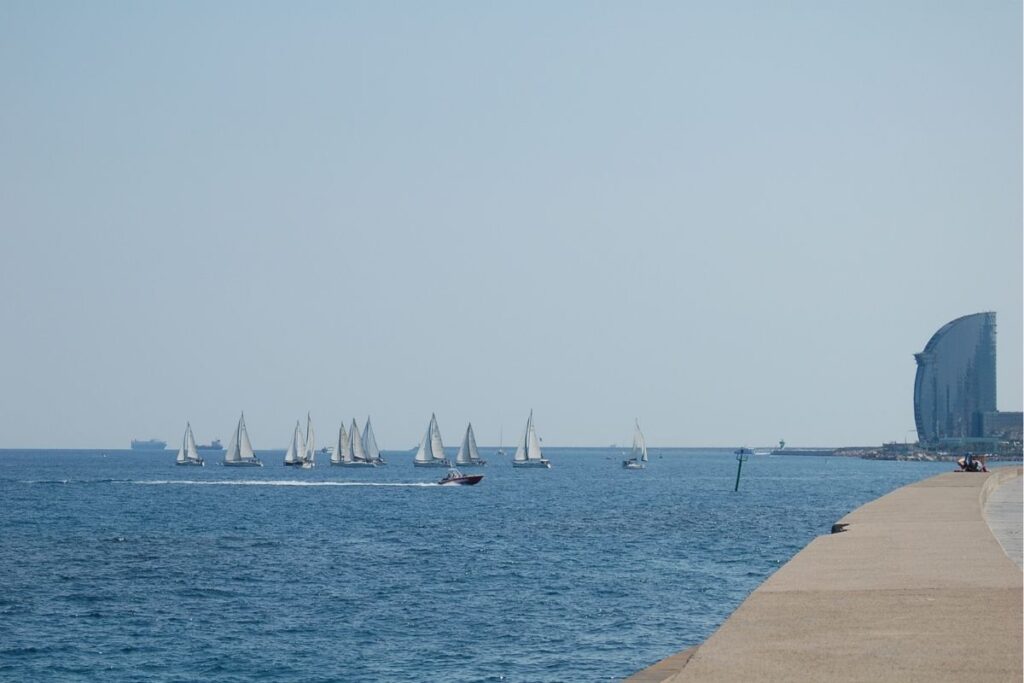
Our home city, and a natural starting point for many international teams. Barcelona pairs a major airport with a dense cluster of hotels and a coastline within a short drive of the centre. A group can move between a modernist landmark, a beach club, and a hillside venue without losing a full day to transport. It works equally well for a twenty-person leadership offsite and a five-hundred-person company-wide event.
Valencia
A coastal city with UNESCO-listed heritage, world-class cuisine, and more than 300 days of sunshine a year. Valencia has become one of our most requested destinations for mid-sized groups. Paella cook-offs, sailing on the same waters that hosted the America’s Cup, and treasure hunts through Santiago Calatrava’s City of Arts and Sciences all deliver a strong sense of place. Our full guide to corporate team building in Valencia covers six distinct activities in detail.
Mallorca and the Balearic Islands
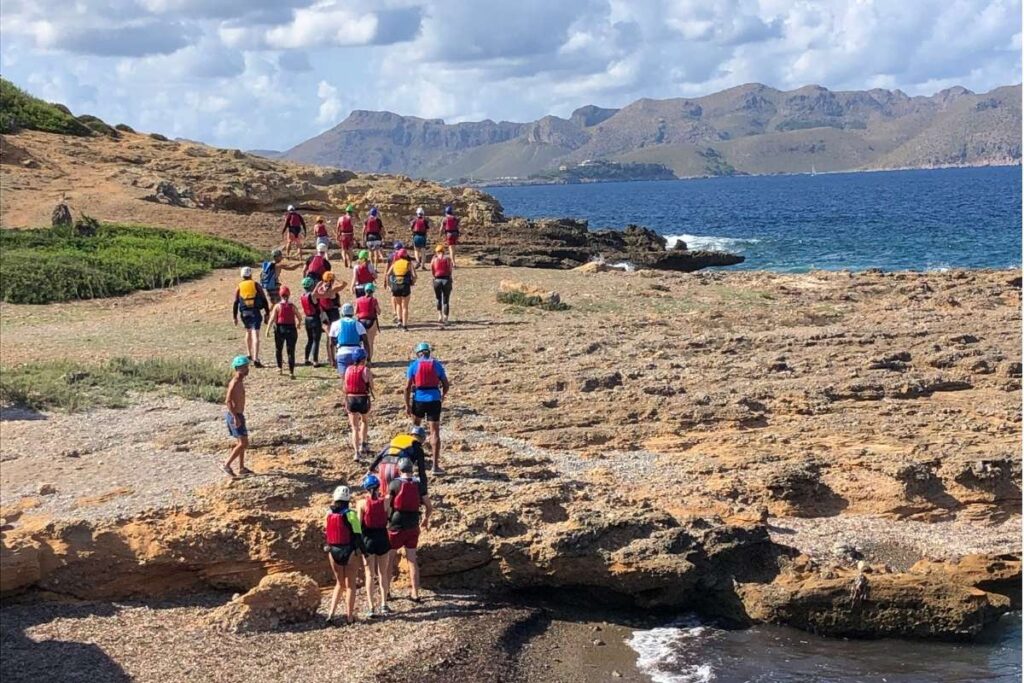
Mallorca combines an easy two-hour flight from most European hubs with a landscape that shifts fast. Cliffside coves sit a short drive from inland wine country, which gives programme designers unusually varied terrain to work with. Mallorca suits groups that want to pair team building with a broader incentive trip. The island’s hotel and venue standard supports both working sessions and evening events at the same property.
Seville and Andalusia
Seville brings a different register entirely, with Andalusian architecture, flamenco culture, and historic courtyards. These settings suit cultural and creative formats particularly well. Smaller connecting flights through Madrid or Barcelona are a fair trade-off for a setting that consistently produces the most memorable closing events on a multi-day itinerary.
Portugal extends the same logistical footprint without adding real complexity to the planning. Porto’s riverside quays and centuries-old wine cellars deliver a genuinely different atmosphere within the same two-hour flight radius most European teams already budget for. Our Porto team building guide covers six activities built around the city and the Douro Valley. Many of our clients run split programmes, pairing a Spanish city with Porto for teams that want two destinations in a single trip.
What a Team Building Partner Handles For You
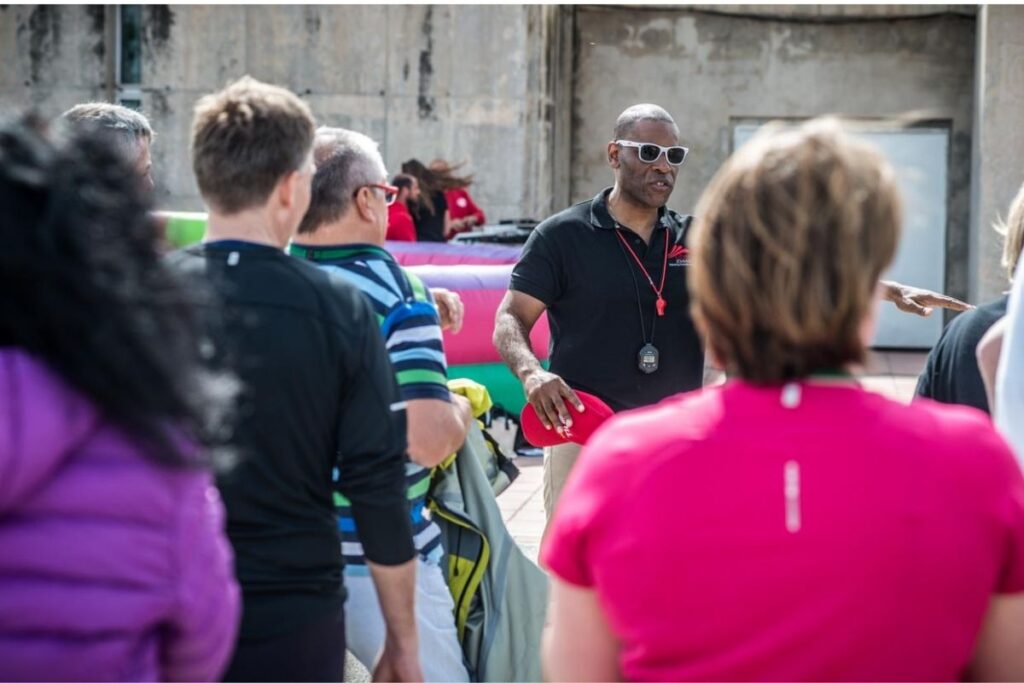
Working with Crossover changes the shape of a project considerably. Instead of researching venues and negotiating with activity providers yourself, often in a language you may not speak, you brief our team. We coordinate everything on the ground.
For corporate team building Spain, that typically includes activity design matched to your group’s profile, venue and supplier sourcing, transport between locations, catering and dietary management, and onsite facilitation in the local language. You get a single point of contact at Crossover for the entire day or programme, backed by more than 20 years delivering events across Spain and Portugal. If the model is new to you, our explainer on what a DMC does for corporate events breaks the role down in more detail. Our team building services page outlines our full approach.
How We Plan a Team Building Event in Spain
Our process runs in four stages, whether the programme is a half-day activity or a multi-day retreat.
Briefing and proposal. We start with your objectives, group profile, dates, and budget range. We then return with activity recommendations and a draft itinerary matched to what you are trying to achieve.
Design and confirmation. Once the direction is agreed, we lock in venues and suppliers. We adapt the activity to your group’s language and size, then build a detailed run of show.
Onsite delivery. Our team facilitates the day itself and manages every logistical detail. Your group can focus on the experience rather than the schedule.
Follow-up. We gather feedback and provide a short summary. That summary supports internal reporting and helps shape the next programme.
Budget Guidance for Team Building in Spain
Costs depend heavily on group size, activity complexity, destination, and season. Treat any figure as a starting point rather than a fixed price. A half-day culinary or workshop-based activity generally costs less than a full outdoor or water-based programme that needs specialist equipment and extra safety staff. Group size affects the per-person rate as well, since fixed costs such as facilitation and equipment hire spread more thinly across larger groups.
Peak season, broadly April through June and September through October, brings higher demand on activity providers and venues in the most popular cities. Booking further ahead protects both availability and price. We always build proposals around your actual budget and objectives rather than a fixed package. Treat the guidance here as the start of a conversation, not a quote.
How Far in Advance to Plan Team Building in Spain
Timelines vary with group size and complexity, but a few patterns hold consistently. For groups under fifty people booking a single activity, six to eight weeks is usually enough. That assumes the dates avoid a citywide event that limits venue and hotel availability. Larger groups, multi-activity programmes, or anything combined with a wider incentive trip benefit from three to four months. That extra time allows us to secure the right suppliers and negotiate properly. Whatever your timeline, starting the conversation early costs nothing and keeps every option open for longer.
Combining Team Building With a Wider Programme
Team building rarely happens in isolation. Many of our clients pair it with a broader incentive travel programme, using the activity as the opening or closing element of a multi-day trip. Others combine it with structured leadership and training sessions, particularly when the goal is developing specific skills alongside informal bonding. Companies with sustainability commitments increasingly ask us to build those priorities into the activity itself. Our guide to sustainable event management covers this in more depth.
A Real Team Building Programme We Have Delivered
Rather than describe our approach in the abstract, it helps to see it applied. We designed an adventure-based leadership programme that turned twelve independent executives into a genuinely unified team in a single day in Barcelona. The project is documented in our executive team building case study. It reflects the same principle behind every programme we build: understand the objective first, then design the activity and logistics around it.
Frequently Asked Questions About Team Building in Spain
What is the best city in Spain for team building? There is no single best city. Barcelona suits groups that want strong connectivity and a wide range of venues. Valencia works well for mid-sized groups after culture and coastline, and Seville fits programmes built around a striking cultural setting. We match the destination to your group’s profile rather than defaulting to one city.
How many people can you organise team building for? Our programmes range from small leadership groups of under fifteen to company-wide events of several hundred attendees. We adapt the format and logistics to suit each size.
Can corporate team building Spain be tailored to specific objectives? Yes. Every activity we run can be adjusted for duration, language, group size, and thematic focus. That includes leadership development, communication, or simply reconnecting a team after a difficult period.
Do you combine team building with other event types? Regularly. Team building often opens or closes a wider conference, incentive trip, or leadership offsite. We design the full programme as a single narrative, not separate, disconnected elements.
Do you organise team building in Portugal as well as Spain? Yes. Alongside Valencia, Mallorca, Seville, and Barcelona, we run programmes in Porto and the Douro Valley. That suits companies that want a Spain and Portugal itinerary within a single trip.
How is a team building day in Spain usually structured? Most single-day programmes run for four to six hours, including a short briefing, the main activity, and a closing moment such as a shared meal or drinks. Multi-day programmes typically add a second activity, a leadership session, or free time, depending on the group’s objectives.
Getting Started With Team Building in Spain
Every team is different, which is why we design every programme from scratch rather than pulling from a fixed catalogue. If a corporate team building Spain is on your agenda, whether a single afternoon activity or the centrepiece of a multi-day retreat, tell us your group size, destination preferences, and objectives. We will put together a tailored proposal. Contact our team to start the conversation.