
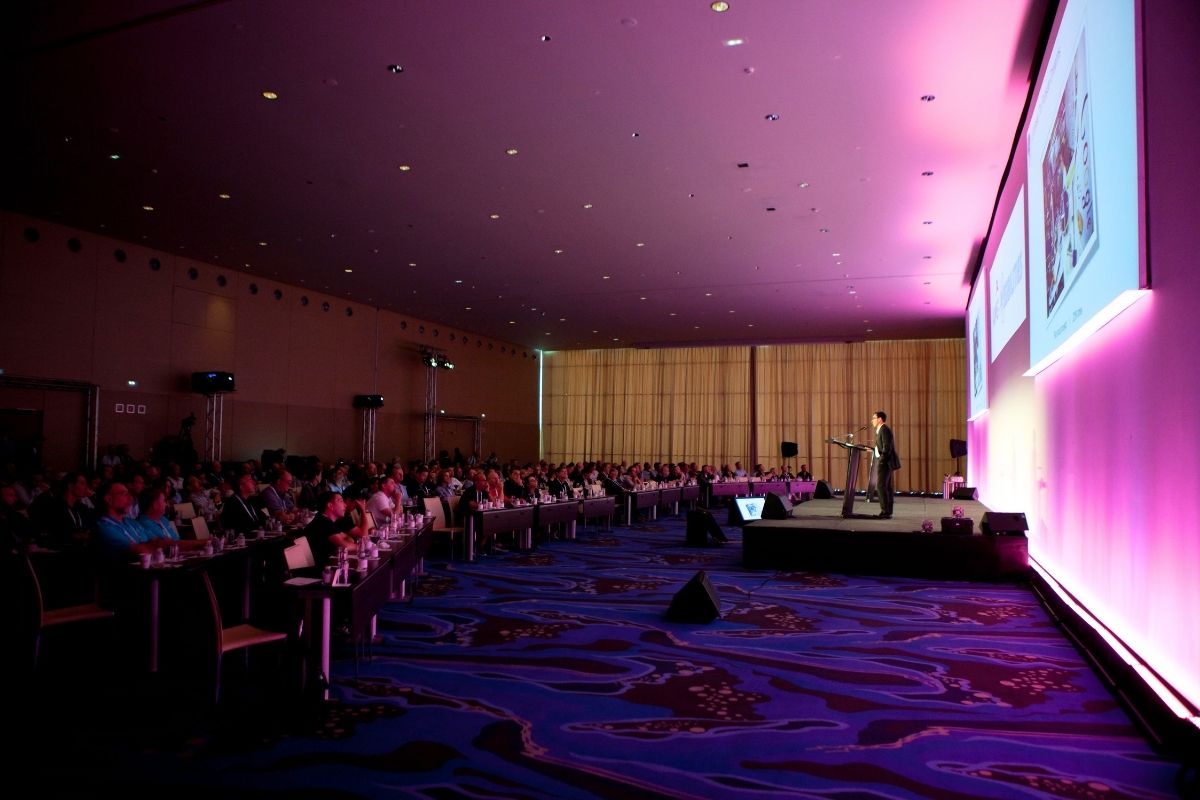
Conference planning Spain covers a distinct set of challenges. Venue capacity, technical production, and delegate management sit at the centre. Team activities and evening entertainment matter far less here than in other corporate events. This guide is for anyone organising a conference, congress, or large-scale meeting in Spain. It is written for HR leads, marketing teams, and executive assistants comparing venues and suppliers for the first time. We cover venue selection, AV and hybrid production, delegate management, speaker logistics, budget guidance, and what a local partner handles on your behalf.
What Makes Conference Planning in Spain Different
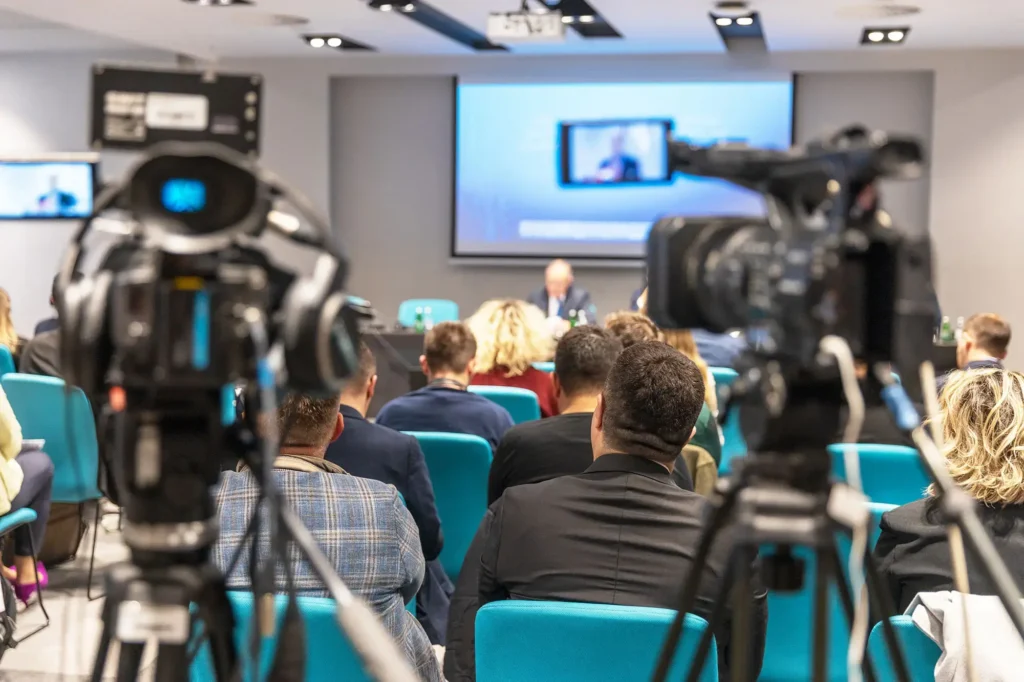
A conference brings a different set of demands than a team offsite or an incentive trip. Attendee numbers run higher, often into the hundreds. Content and speaker logistics matter as much as the venue itself. Registration, badging, and onsite check-in need to work at scale. Sometimes a few hundred people arrive within a single hour. This is where conference planning Spain differs most from a standard corporate event.
Hybrid delivery has also become close to standard practice. Remote attendees now expect the same production quality as the room itself. Most organisers plan to keep offering hybrid formats through 2026, according to recent hybrid conference research. That shifts planning earlier in the process. A strong hybrid stream needs to be designed from the outset, not added at the last minute.
Choosing the Right Conference Venue in Spain
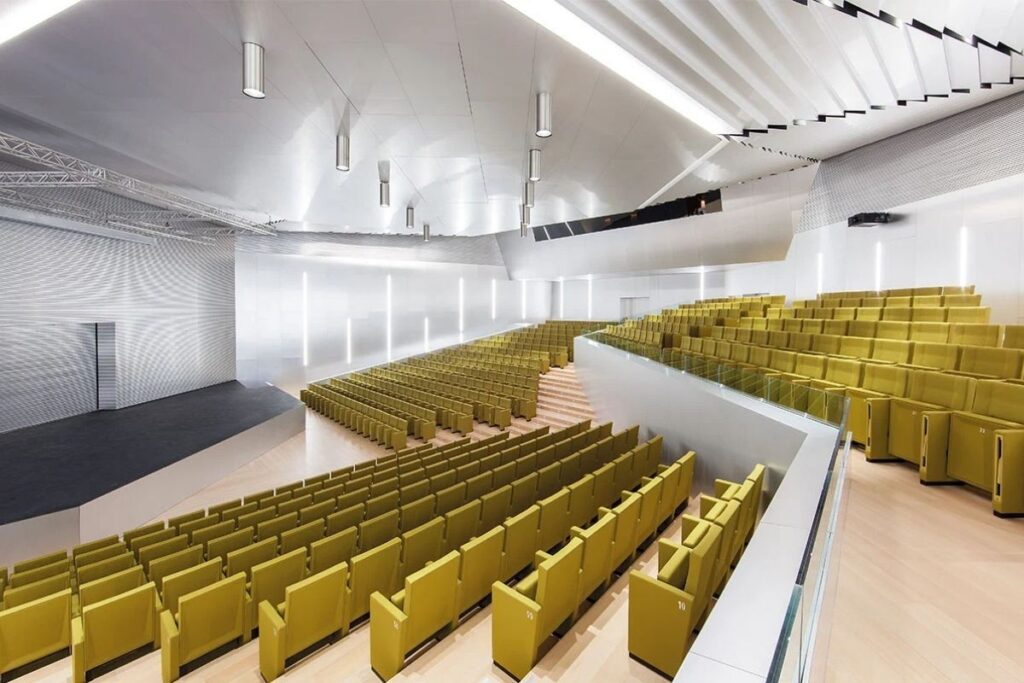
Venue choice shapes everything else on the programme, from AV setup to catering flow. It deserves the most time in the planning process. Spain offers three broad venue categories for conferences, and each suits a different scale and budget.
Convention Centres and Congress Palaces
Spain’s major cities host purpose-built convention centres designed for exactly this kind of event. These venues come with in-house technical infrastructure and flexible plenary and breakout spaces. Staff on site are experienced in large-scale delegate flow. They suit conferences of 300 people or more. They work particularly well for events with a trade show or exhibition component running alongside the main programme.
Hotel Conference Facilities
Many four and five-star hotels across Spain offer dedicated conference floors. Plenary rooms, breakout spaces, and onsite catering all sit under one roof. This works well for conferences under 300 people, since delegates can move between sessions, meals, and their rooms without leaving the building. It also simplifies logistics considerably, particularly for multi-day programmes.
Unique and Alternative Venues
For smaller conferences, or those pairing content with brand experience, unique venues bring atmosphere a standard venue cannot match. Museums, former industrial spaces, and design-forward auditoriums all work well for this. The trade-off is usually technical infrastructure. Alternative venues often need more AV equipment brought in rather than built in, which adds cost and coordination time.
AV and Technical Production for Conferences
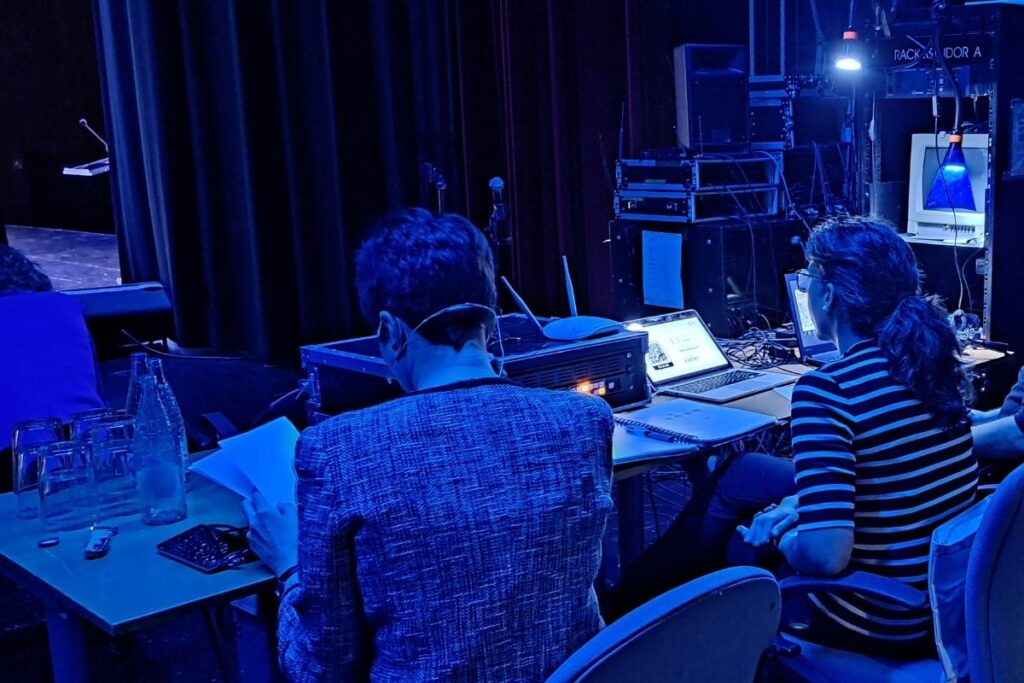
Technical production is where conferences differ most from other corporate events. It deserves a dedicated budget line, not a rounding error on the venue quote.
A solid production plan covers staging, lighting, and sound matched to room size and content format. Simultaneous interpretation booths matter for any conference with a multilingual audience, which is common across Spain’s international business community. Interpreters typically work in pairs per language, rotating every twenty to thirty minutes to maintain quality throughout a full day.
Hybrid streaming, when included, needs multi-camera coverage and a dedicated production team. It also needs a separate content plan for the remote audience, rather than a single camera pointed at the stage. Remote viewers disengage quickly from static footage, so the production plan should treat the stream as its own experience.
Getting the technical brief right early avoids costly changes later. A production team that understands the content and audience from the start designs a system that fits. Retrofitting equipment once the room is already booked almost always costs more.
Room configuration deserves its own line of thinking too. Theatre-style seating maximises capacity for a keynote-heavy agenda, while cabaret or classroom layouts suit conferences built around workshops and breakout discussion. Switching configurations between sessions is possible but adds turnaround time, so it is worth mapping the full-day flow before confirming the room plan rather than adjusting it on the day.
Speaker and Content Logistics
Speakers add a layer of coordination most other corporate events do not need. Travel, accommodation, technical rehearsals, and presentation files all need managing well before the conference date.
A clear speaker brief covers session length, format, AV requirements, and deadlines for slides or pre-recorded content. Building in a technical rehearsal slot, even a short one, catches problems while there is still time to fix them. For external or high-profile speakers, a single point of contact on the organiser’s side avoids the confusion that comes from multiple people reaching out with the same requests.
Delegate and Registration Management
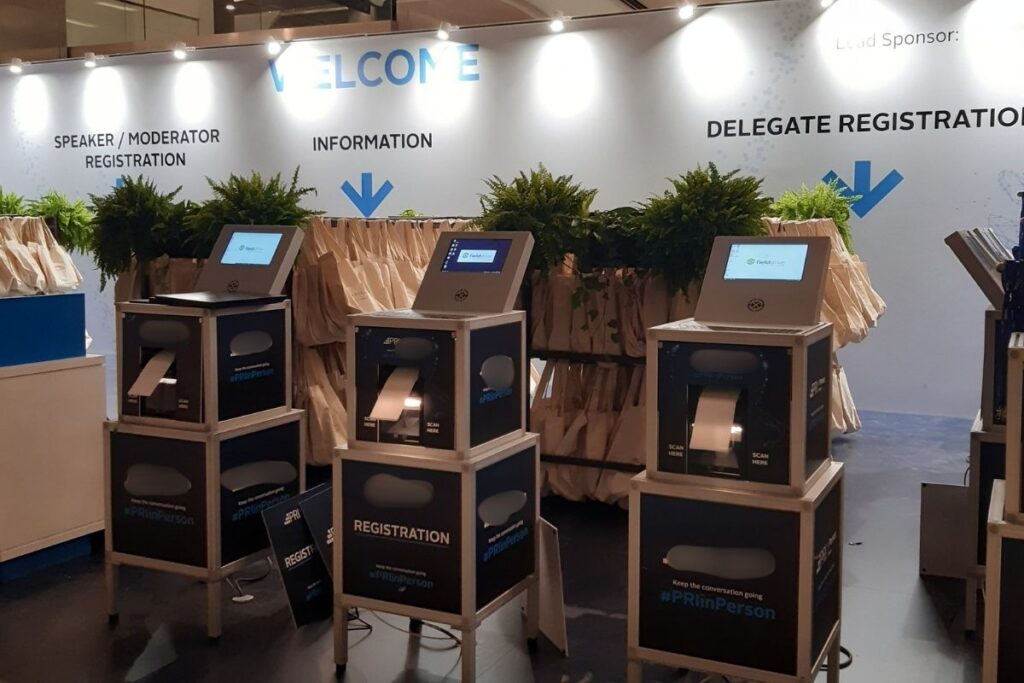
Registration is often a delegate’s first hands-on interaction with your event. A slow or confusing process sets the wrong tone before the first session even starts.
Modern registration platforms handle online sign-up, payment, and communication before the event. They then shift to badge printing and check-in onsite. Digital check-in can cut average wait times by roughly 75 percent compared with paper-based processes, according to recent event registration benchmark data. For a conference expecting several hundred arrivals within the same hour, that difference determines whether the morning starts on schedule.
Beyond check-in, delegate management covers dietary requirements, accessibility needs, and session capacity limits. It also covers real-time attendance tracking, particularly useful for continuing education credits or compliance-driven events. A single connected system, rather than separate spreadsheets for each function, keeps the data accurate. It also keeps the onsite team working from the same picture.
Best Cities for Conference Planning in Spain
Spain’s main business cities each bring a different mix of venue capacity, connectivity, and atmosphere. Matching the city to your conference profile matters as much as the venue itself.
Barcelona
Our home city, and a natural fit for international conferences. Barcelona pairs a major convention centre with a dense hotel inventory and strong airport connectivity. Our Barcelona events company guide covers the city’s venues and neighbourhoods in more depth.
Madrid
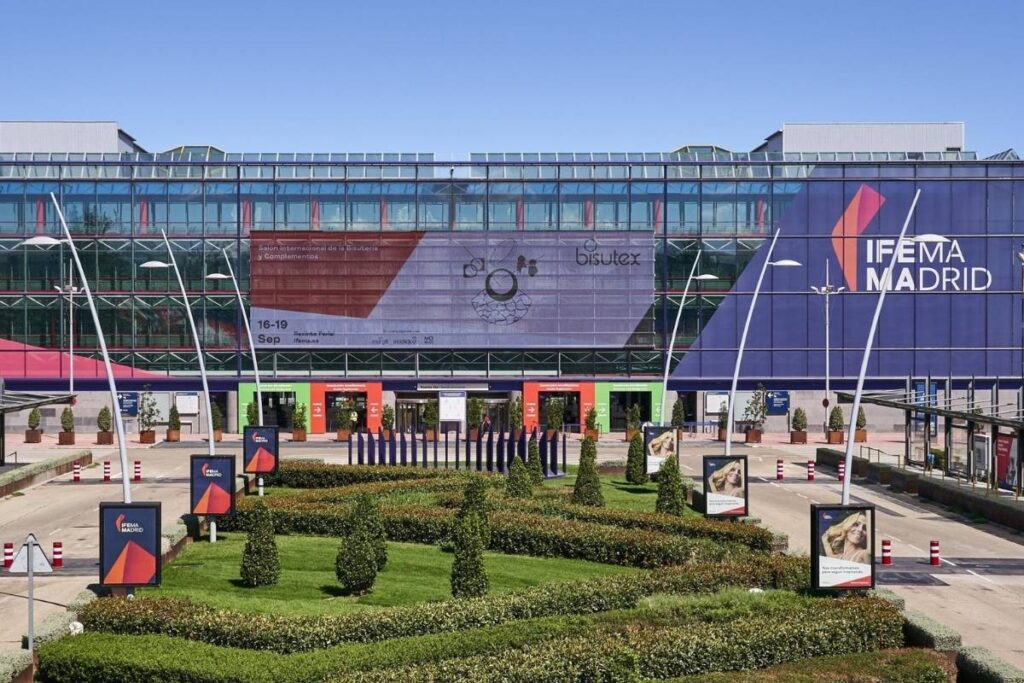
As Spain’s capital, Madrid offers the country’s largest concentration of conference-ready hotels and convention space. Excellent international flight connections make it easy to reach from most of Europe. It suits large corporate conferences and congresses with delegates arriving from multiple countries.
Valencia and Seville
Valencia and Seville suit conferences where atmosphere plays a bigger role alongside the core programme, from a closing gala to a cultural evening event. Our guide to corporate events in Seville covers venues and logistics specific to that city.
What We Handle at Crossover
Conference planning in Spain involves more moving parts than most internal teams can manage remotely, particularly for anything over 150 delegates. As a SpainDMCs member, Crossover brings verified local expertise to every stage of the process.
We handle venue sourcing and negotiation, technical production and AV, registration and delegate management, speaker logistics, and onsite delivery. You get all of this from a single point of contact rather than a different supplier for each piece. That single point of contact is what conference planning Spain looks like when it works well. If the model is new to you, our explainer on what a DMC does for corporate events breaks the role down further. Our guide to corporate event management in Spain covers the broader scope beyond conferences specifically.
How We Plan a Conference in Spain
Our process runs in four stages, adjusted for the scale and complexity of the conference.
Briefing and proposal. We start with your objectives, delegate numbers, content format, and budget range. We then return with venue recommendations and a draft technical plan.
Design and confirmation. Once the direction is agreed, we lock in the venue and production suppliers. We build the registration system and confirm the run of show session by session.
Onsite delivery. Our team manages registration, technical production, and delegate flow throughout the conference, solving problems before they reach you.
Follow-up. We reconcile supplier invoices and share attendance data and feedback. That supports internal reporting and next year’s planning.
Budget Guidance for Conference Planning in Spain
Costs vary widely based on delegate numbers, venue type, and technical requirements. Treat any figure here as a starting point rather than a quote. Venue hire and catering typically make up the largest share of the budget. Technical production runs close behind for any conference including a hybrid component. Registration technology adds a smaller but fixed cost that scales with delegate numbers rather than venue choice.
Peak season for conference venues in Barcelona and Madrid runs roughly March through June and September through November. The best venues and interpretation teams book out fastest during these months. We build every proposal around your actual budget and objectives, so use this section as the start of a conversation, not a fixed number.
How Far in Advance to Plan a Conference in Spain
Timelines depend heavily on delegate numbers and venue type. For conferences under 150 people using a hotel venue, five to six months is usually enough. That assumes the dates avoid peak season in your target city. Larger conferences, anything using a major convention centre, or programmes with a hybrid component benefit from one nine months to a year. That extra time secures the right venue and gives the production team room to design properly, rather than scramble.
Sustainability in Conference Planning
Sustainability has moved from an optional add-on to a standard client request, particularly for conferences with several hundred delegates and the travel footprint that comes with them. Venue choice matters here, since certified venues with responsible energy and waste practices reduce impact without adding cost to the programme. Catering can shift toward local, seasonal menus with clear options for dietary needs, which also tends to improve the food itself.
Digital badges and paperless registration cut waste at scale, particularly for multi-day conferences that would otherwise print badges and materials for every delegate each morning. Hybrid delivery, covered earlier for its production value, also reduces the total travel footprint of a conference by allowing part of the audience to attend remotely. Our guide to sustainable event management covers certification and planning in more depth.
A Real Conference We Have Delivered
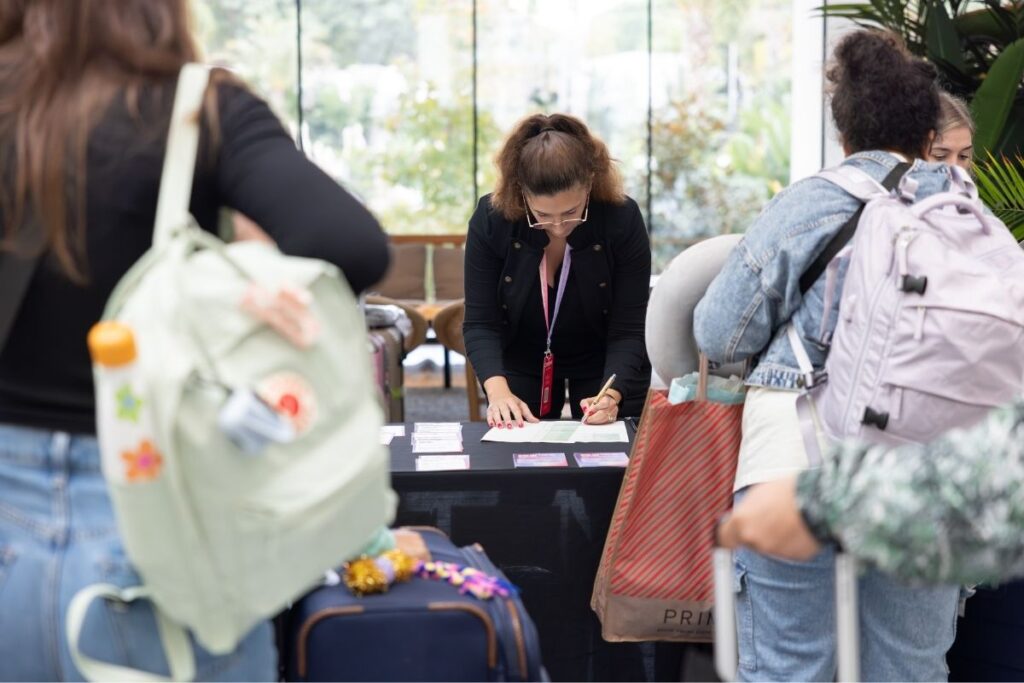
Rather than describe our approach in the abstract, it helps to see it applied. We delivered a five-day annual meeting in Barcelona for 148 attendees, documented in our conference case study. The project covered venue sourcing, full technical production, and delegate management from registration through to the closing session. It reflects the same approach behind every conference we plan.
Frequently Asked Questions About Conference Planning in Spain
What size of conference can you manage in Spain? Our programmes range from 50-person leadership conferences to events of several hundred delegates. We adjust venue, technical production, and staffing to match.
Do you handle hybrid and streamed conferences? Yes. We design the hybrid production plan from the start of the project. That includes multi-camera coverage, a dedicated stream team, and content built for the remote audience specifically.
Can you manage simultaneous interpretation? Yes. We coordinate interpretation booths and interpreters for multilingual conferences, a common requirement across Spain’s international business community.
How does conference planning differ from general event management? Conference planning Spain focuses specifically on venue capacity, technical production, and delegate management at scale. Our broader corporate event management service covers a wider range of event types beyond conferences.
Do you manage registration and check-in onsite? Yes. We set up and run the registration platform, badge printing, and onsite check-in. Delegates move through arrival quickly, and your team is not managing the desk.
Can speakers and content be coordinated across multiple languages? Yes. Alongside interpretation, we can manage translated slide decks, subtitled recordings, and bilingual onsite signage for international delegate groups.
Getting Started With Conference Planning in Spain
Every conference has a different mix of delegate numbers, content format, and technical needs. That is why we build every proposal from scratch rather than reusing a fixed package. If conference planning Spain is on your agenda, tell us your delegate numbers, dates, and objectives. We will put together a proposal covering venue, production, and registration. Contact our team to start the conversation.