
Boards are no longer asking whether an incentive trip was memorable. They are asking what it delivered. That shift is changing how companies think about corporate event ROI. The 2025 Incentive Travel Index, a joint study from the Incentive Research Foundation and SITE, found something telling. 43% of senior leaders now want programmes that deliver both ROI and culture-building in the same trip. Budgets are not shrinking either. 55% of buyers expect to spend more on incentive travel in 2026 than they did the previous year.
The good news: proving corporate event ROI does not require a data science team. It requires two things. Set clear objectives before the event. Evaluate them properly afterward.
Why Corporate Event ROI Has Become the First Question
For years, teams approved incentive travel and corporate events on faith. The destination looked appealing, the itinerary stayed full, and everyone assumed the impact would follow. That no longer works. Three in four industry professionals still believe incentive travel holds real value. But belief does not secure next year’s budget. A clear business case does: a stated objective, a way to measure it, and a comparison of results before and after the programme.
This does not mean every event needs a complex ROI model. It means every event needs a starting question. What should be different afterward, and for whom?
The Hygiene Factor Nobody Budgets For
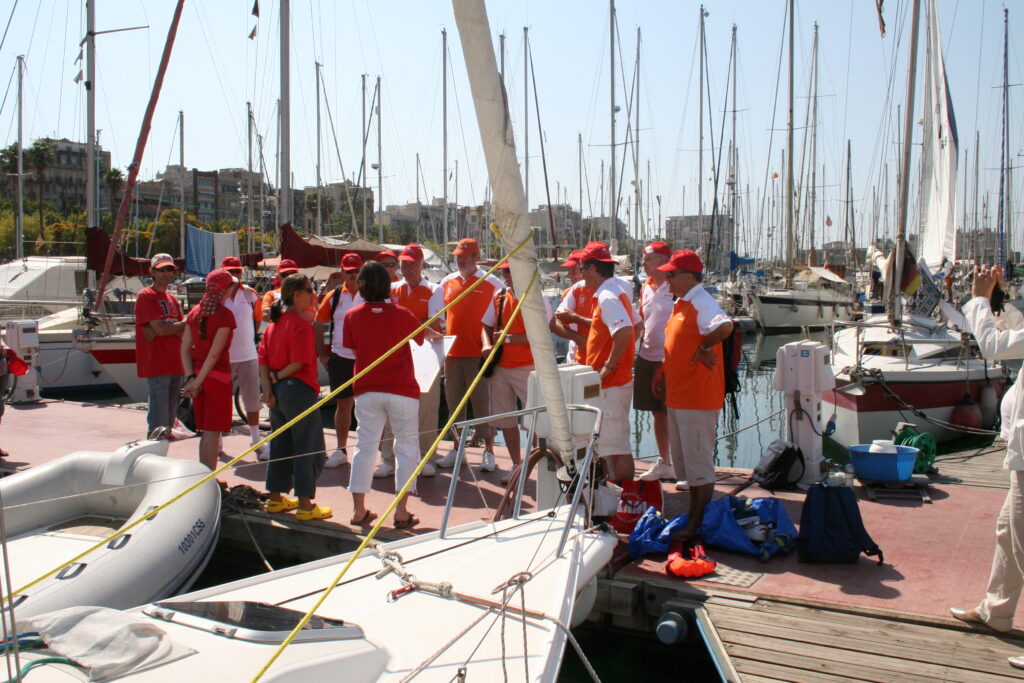
Herzberg’s Hygiene Theory offers a useful analogy here. Some investments do not directly boost performance, but skip them and performance quietly drops. Corporate events work the same way. A well-designed team building programme rarely shows up as a line item in next quarter’s results. Get it wrong, though, or skip it altogether, and the drop in morale shows up everywhere else.
The most overlooked category in event planning is not the headline activity. It is the missing intention behind it.
Setting Objectives Before You Choose a Destination
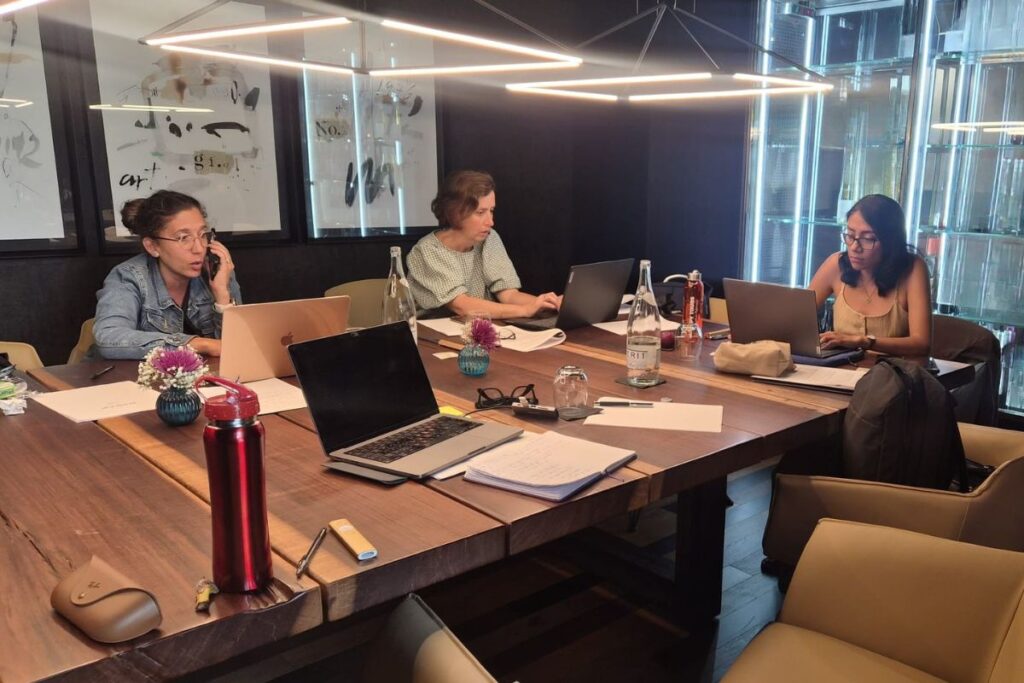
Destination and venue should follow the objective, not the other way around. Before locking in a location, bring every stakeholder into a short conversation. HR, sales leadership, and finance should each name what success looks like: higher retention among top performers, stronger cross-team relationships, or a faster-onboarding sales cohort.
This is where a good DMC in Spain and Portugal earns its role from the first call. Venue finding, hotel reservations, airport transfers, ground transportation, and full project management should all build toward your stated outcome, not just fill an itinerary.
A Simple Framework for Measuring Corporate Event ROI
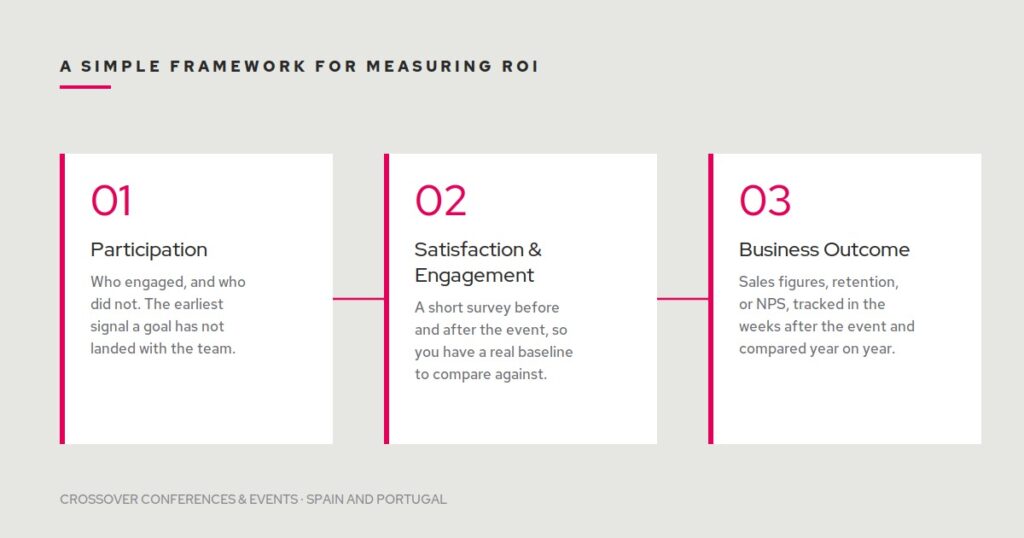
You do not need advanced analytics to measure a corporate event well. Three checkpoints cover most objectives.
Participation. Who engaged, and who did not? Low participation is often the earliest signal that a programme’s goals never landed.
Satisfaction and engagement. Run a short survey before and after the event. Ask specific questions rather than a general “how was it,” so you get a real baseline to compare against.
Business outcome. This is the checkpoint that gets a proposal approved. Track a sales figure, a retention rate, or a Net Promoter Score in the weeks following the event, and compare it against the same period the year before.
Hard numbers and soft outcomes are not competitors. A programme that lifts morale and a programme that lifts sales are usually the same programme, measured from two different angles.
How Crossover Designs Corporate Events With ROI Built In
At Crossover, we raise the measurement question in the first consultation, not the wrap-up report. Working across Spain and Portugal, we pair corporate event management, venue sourcing, and full logistics with activities designed around your stated objective. A wine tasting can build relationships. A treasure hunt can build cross-departmental collaboration. A cooking workshop can give a newly merged team a reason to simply talk to each other.
We also build sustainability into the plan from day one, as a Biosphere-certified agency, rather than adding it as an afterthought. That increasingly matters to the stakeholders signing off on your budget. Read more about our approach to responsible event management.
Frequently Asked Questions
What is a good ROI benchmark for a corporate event? There is no universal number. The right benchmark depends entirely on your stated objective. A sales incentive trip might target a percentage lift in post-trip sales among attendees. A team-building day might target a measurable improvement in an engagement survey. Agree the benchmark before the event, not after it.
How do you measure corporate event ROI without direct sales data? Use soft ROI indicators instead: participation rates, before-and-after satisfaction scores, and attendee retention over the following months. These are harder to attach a euro figure to, but you can track them just as consistently as sales data.
Who should be involved in setting event objectives? Involve anyone whose department stands to benefit. HR usually owns retention and culture goals. Sales leadership owns performance goals. Finance owns budget accountability. Bring all three in before you choose a destination, and a nice trip becomes a measurable one.
Plan Your Next Event Around a Measurable Outcome
If you are planning a corporate event or incentive programme, start the conversation with your objective, not your destination. Get in touch with our team, and we will help you build a programme in Spain or Portugal designed to deliver both the experience your team remembers and the results your stakeholders need to see.
You can also subscribe to our newsletter for more practical frameworks like this one, sent straight to your inbox.