
When a global automotive brand reached its 100th anniversary, the celebration was never going to be a standard staff party. The company had spent years rewarding its top dealers with trips to some of the world’s most striking destinations. This incentive travel Barcelona program had to live up to that history, not fall short of it. The trip also included the dealers’ partners, bringing total numbers to 166 guests across a three day program.
Their appointed agency brought us in as the destination management partner partner on the ground. We handled transport, catering and a curated set of experiences that showed off the city and the region. None of it could feel like a corporate team building exercise. For a related project with a similar brief, our executive team building case study in Barcelona covers how we ran a corporate leadership program at a smaller scale. Here is how we approached this one, and what it took to make a group this size feel looked after from the moment they landed.
The Brief for an Incentive Travel Barcelona Program
The brief came with three clear constraints. First, nothing on the program could resemble competitive team building. The company wanted to reward dealers and partners for performance, not push colleagues to bond. Second, the pace had to stay relaxed. Long haul travel takes a toll, and an exhausting itinerary would have undone the goodwill the trip aimed to build. Third, Barcelona had to hold its own as a destination for corporate events against more exotic locations the group had visited on previous incentive trips.
Layered on top of that were the practical realities of a 166 person group. Guests arrived on different flights throughout the day. Dietary requirements varied widely. And the client wanted us to specify the gala dinner staging, lighting and table plan down to the last detail.
Day One: A Staggered Arrival and a Floating Welcome
Rather than treat the arrival as a single logistical event, we split it into five waves throughout the day. Group sizes ranged from 4 to 77 people. The first arrivals went straight to an exclusive lounge club for a drinks reception and lunch. That gave them somewhere comfortable to relax while later flights landed.
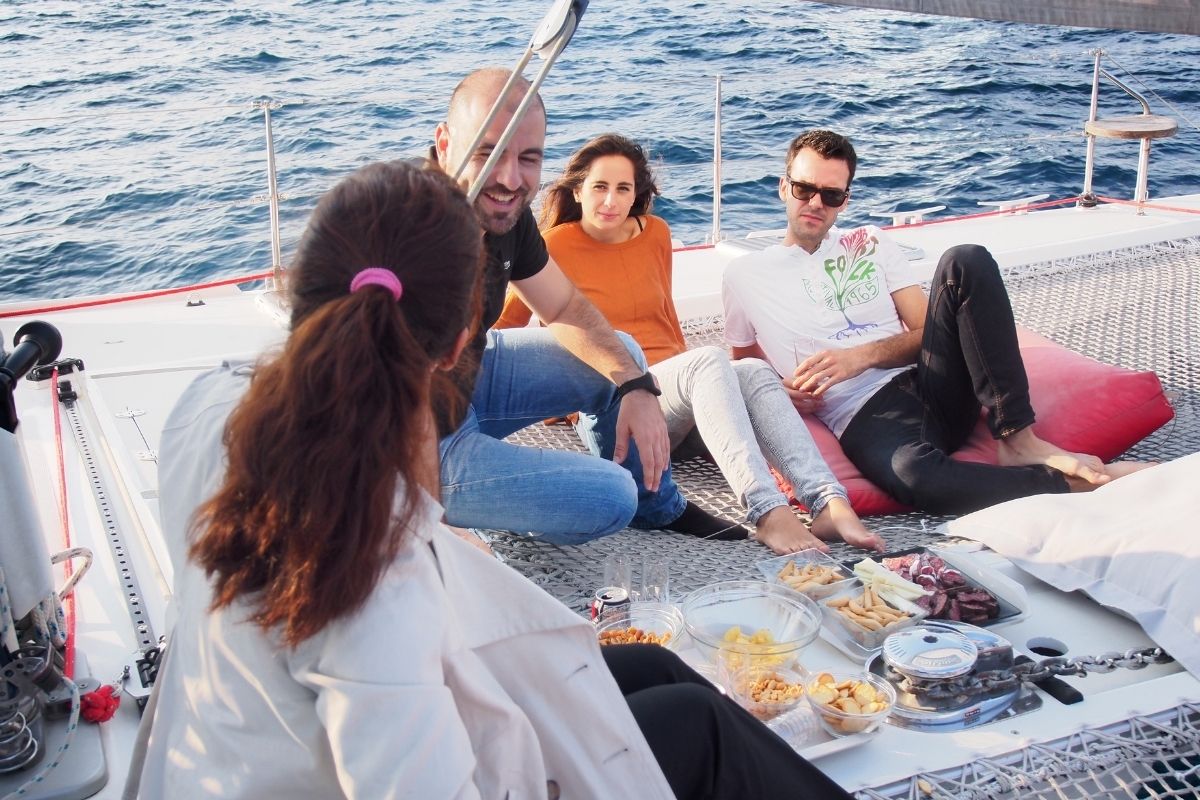
A hired catamaran served as a second base for the afternoon. As more guests arrived, we split the group in two. One half took a short cruise along the coastline while the other socialised at the club, then they swapped. Nobody sat around waiting, and everybody saw the city from the water before the day was through. In the evening, we transferred guests to their hotel to get ready for a welcome dinner. We chose the restaurant specifically for its views over Barcelona.
Day Two: Three Journeys Through Catalan Culture
The second day ran three parallel itineraries. This is where a large group program either holds together or falls apart. Good coordination and clear transfer timing meant all three could run at once, and nobody felt like they had drawn the shorter straw.
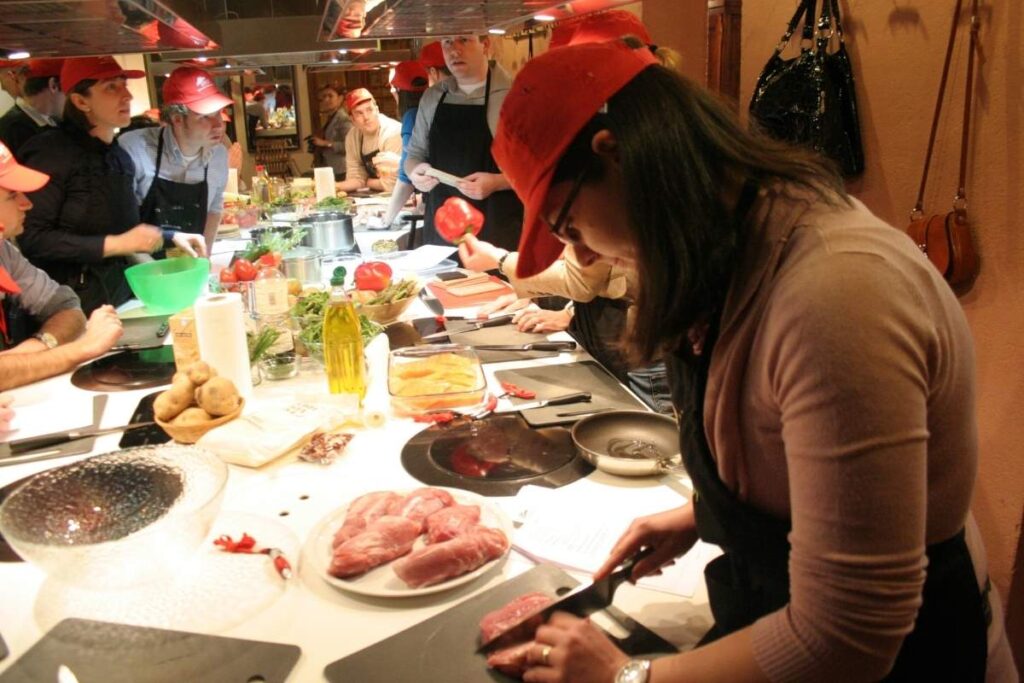
One group took part in a gastronomic workshop day. It included cheese tasting, a blindfolded wine tasting, an aroma workshop and a tapas making session, followed by a three course lunch with local wines. A second group started with a guided tour of the Boqueria market, moved on to a tapas lunch, then finished the afternoon in a century old wine cellar, where a wine expert led a tasting. The third group followed a different rhythm altogether, with a shopping tour and lunch in a rustic restaurant outside the main tourist track.
None of the three days asked guests to compete, solve problems together or perform in front of colleagues. Every activity centred on tasting, learning and looking, which kept the trip firmly in reward territory rather than team building. For groups that do want a structured team building program in Spain and Portugal, that is a different brief, and one we run just as often.
The Gala Dinner: A Hilltop Finale
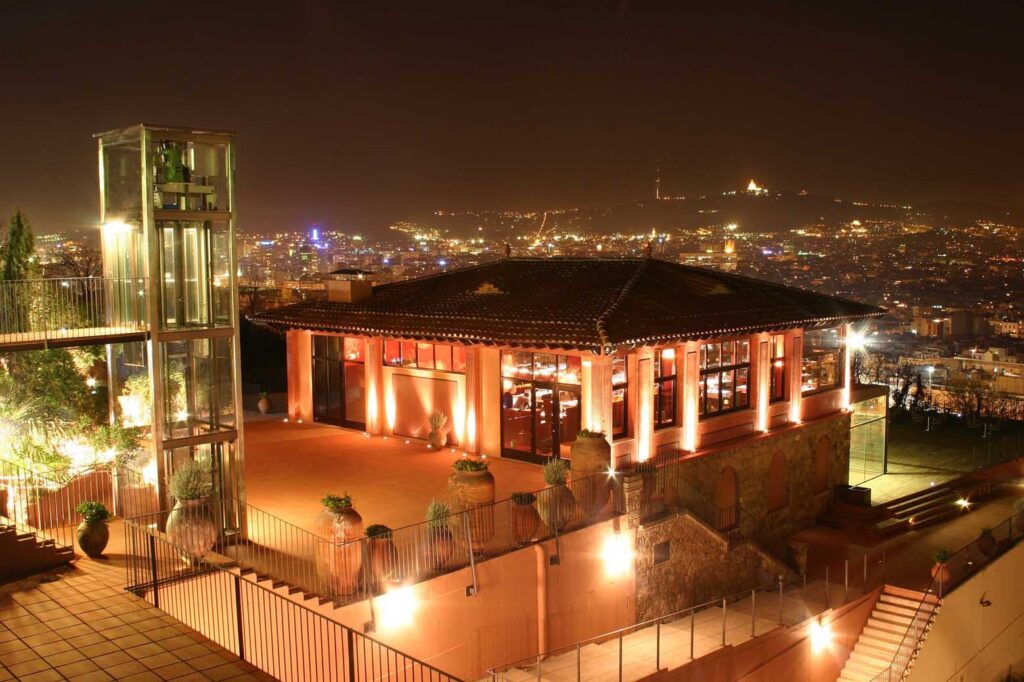
The main event of the program was a gala dinner at a hilltop restaurant just outside the city. The client had given detailed instructions on table layout, decoration and lighting, and we checked every element against that brief before doors opened.
We tailored the menu per guest according to taste and dietary requirement, a meaningful undertaking at this scale. Guests arrived to a cava cocktail and a traditional rumba and sevillana show. Dinner followed, then live entertainment through dessert, then a DJ for the rest of the night. We staggered transfers again at the end of the evening to get everyone back to the hotel without a bottleneck at the door.
Day Three: A Clean Departure
We dedicated the final day entirely to getting all 166 guests to the airport in time for their flights home, spread across different departure times and terminals. A smooth departure rarely gets mentioned in feedback, but it is the last impression a guest takes home. We gave it the same attention as the arrival.
What Made This Incentive Travel Barcelona Program Work
Three things carried this program. The first was destination selection, and it’s where most incentive travel Barcelona programs succeed or fail. Barcelona’s standing with the Barcelona Convention Bureau as one of Europe’s top MICE cities gave us a strong starting point, but we still chose experiences that showed the authentic side of Catalonia rather than the obvious tourist stops. The second was local representation. We stationed representatives across every touchpoint, from airport arrivals to each of the day two itineraries, so we could handle requests in real time rather than escalate them. The third was internal coordination. Running three simultaneous experiences for a 166 person group only works if transfers, timing and communication between teams stay tightly managed. That coordination is what kept the second day feeling effortless from the guest side.
The Result
The program delivered a balance of culture, relaxation and celebration that matched what the client asked for. Not a single element felt like team building in disguise. The appointed agency’s representative summed up the collaboration afterward:
I was pleasantly surprised by your help, your devotion to make the incentive a success, and the team enthusiasm. Our client and I felt very confident throughout the process from proposal until the incentive was finished. Keep up the good work!”
— Programme lead, appointed agency
Planning a Large Group Incentive Trip to Barcelona: Five Takeaways
If incentive travel Barcelona is on your radar for a large scale program, a few lessons from this one echo what the Society for Incentive Travel Excellence recommends for group incentive design:
- Stagger arrivals rather than fighting a single peak. A floating or flexible base, such as a boat or a lounge space, absorbs the gap between flight times.
- Run parallel itineraries when the group is too large for one activity, but only if you plan transfer logistics to the minute.
- Keep incentive programs free of anything competitive. Rewarded guests want to relax, taste and experience, not perform.
- Treat the gala dinner brief as non negotiable on the details that matter most to the client, from table layout to dietary requirements per guest.
- Plan the departure with the same care as the arrival. It is the last thing guests remember.
Planning Your Own Incentive Travel Program in Barcelona
Programs at this scale depend on local knowledge, supplier relationships and a team that can run several moving parts at once. The guest never sees the effort behind it. That is the core of our incentive travel across Spain and Portugal, whether the group is 20 people or 200.
If you are planning an incentive trip, anniversary celebration or large scale reward program, get in touch and we will put together a tailored proposal for your group.