
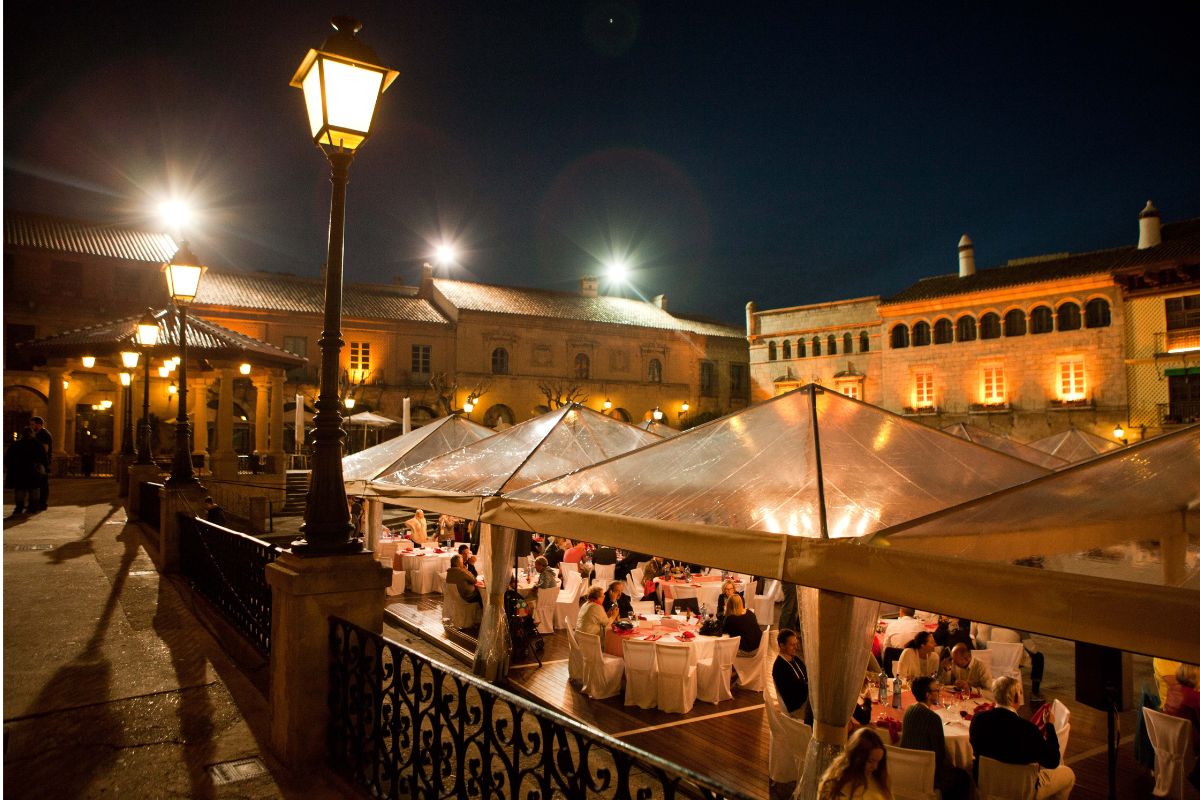
Incentive travel in Spain is not one decision. It is several smaller ones stacked together. Which region. Which season. What size of group. What kind of experience you want your top performers to remember. This guide to incentive travel Spain compares the main regions side by side. It walks through four real incentive briefs and where they land. It also answers the practical questions that come up once budget and dates enter the conversation, and shows what a typical schedule looks like once the planning is done. If you already know your city, our destination guides for Madrid, Seville and Bilbao go deeper on venues and itineraries.
Spain at a Glance for Incentive Planners
Before comparing individual regions, a few country-level facts explain why incentive travel Spain remains such a popular choice in the first place. Globally, average spend on incentive travel programmes reached 5,100 US dollars per person in 2025, according to research from SITE, the Society for Incentive Travel Excellence. That figure underlines why companies treat these trips as a serious investment, not a nice-to-have, and why the choice of region matters so much to the return they see.
- Flight access: most major Spanish cities have direct routes from the UK, Ireland and mainland Europe. Long-haul access is growing too.
- Cost positioning: Spain generally sits below the UK, France and the Nordics on hotel and venue pricing. Five-star quality is not compromised.
- Hospitality readiness: the events workforce is used to international corporate groups. Most staff work comfortably in English.
- Weather range: near year-round sunshine in the south and islands, a milder and greener climate in the north. Few countries offer that spread.
- Safety and stability: Spain consistently ranks among the safer European destinations for large group travel. That matters for duty of care.
Comparing Regions for Incentive Travel Spain
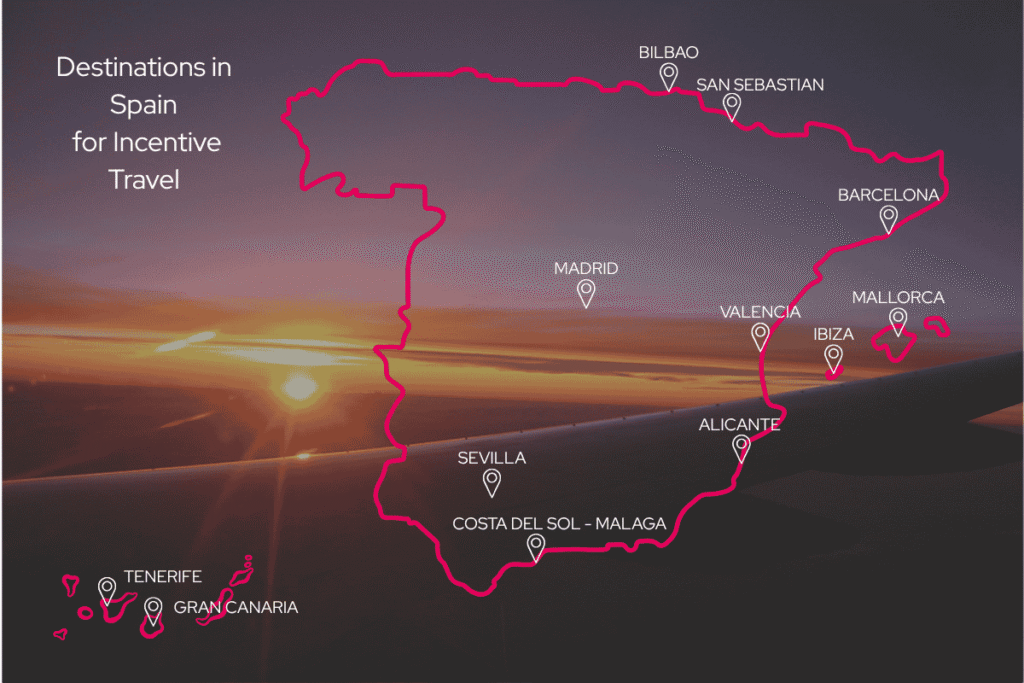
Every region we work in for incentive travel Spain has a different personality. The table below is a starting point, not a final answer. Group size, season and the mood you want to set will still shape the final choice.
| Region | Best suited for | Peak season | Typical budget level | Flight access |
| Barcelona | Mixed-size groups wanting beach, culture and nightlife in one city | May to September | Mid to high | Strong, direct European and long-haul routes |
| Madrid | Client hospitality and senior leadership trips | April, May, September, October | High | Very strong, major international hub |
| Andalucía (Seville, Costa del Sol) | Cultural immersion, a distinctive backdrop, relaxed hospitality | February to June, September to November | Mid | Good, growing direct routes |
| Basque Country (Bilbao, San Sebastián) | Groups who already know Barcelona or Madrid and want somewhere new | June to September | Mid to high | Good, fewer long-haul direct routes |
| Islands (Mallorca, Ibiza) | Smaller, higher-budget resort-style programmes | May to September | High | Good in season, seasonal outside it |
| Canary Islands (Gran Canaria, Tenerife) | Winter and shoulder-season programmes needing guaranteed sun | Year-round | Mid to high | Good, strong European routes |
| Alicante / Costa Blanca | Value-driven programmes wanting beach and golf together | April to October | Low to mid | Good, strong low-cost carrier network |
A few distinctions are worth flagging before you commit to one region.
Barcelona
Barcelona was where Crossover began over twenty years ago. It remains a strong, well-rounded choice, and it is far from the only one worth considering. The city works for almost any group size, from a small executive incentive to a programme running into the hundreds. Its main strength is variety within one place. A group can move from a beach club afternoon to a Gothic Quarter dinner without a single transfer of more than twenty minutes.
Madrid
Madrid tends to win when the trip is really about impressing a client or a senior team. Its hotel and dining scene sits a notch above most other Spanish cities, with a deeper bench of five-star properties and Michelin-listed restaurants. The capital also carries a certain gravity that suits formal programmes, board offsites and anything where the destination itself needs to signal ambition. Check our dedicated guide to incentive travel in Madrid for venues, logistics and sample itineraries.
Andalucía
Seville and the Costa del Sol trade a little of that polish for atmosphere. Flamenco, historic palaces and a slower pace give a programme a distinctive backdrop that no other Spanish region can replicate. Groups who want their trip to feel like a genuine cultural experience, rather than a business trip with nicer scenery, tend to respond well here. Find our dedicated guide to corporate events in Seville for venue and logistics detail.
The Basque Country
Bilbao and San Sebastián suit companies who have already run a programme in Barcelona or Madrid. The region offers a cooler climate, a design-forward identity built around landmarks like the Guggenheim Museum, and a food culture that regularly tops European rankings. It reads as a considered choice rather than a default one, which matters for senior or repeat groups.
The islands
Mallorca and Ibiza work best for smaller, higher-budget groups who want a resort-style programme. Private villas, yacht days and beach clubs are all realistic options here in a way they are not on the mainland. The trade-off is seasonality. Outside the May-to-September window, flight access and venue availability both narrow considerably.
The Canary Islands
Gran Canaria and Tenerife solve a problem the rest of Spain cannot: guaranteed warm weather outside summer. For a programme locked into February or November dates, this is often the only region on the list that still delivers a beach-and-outdoor-activity brief without weather risk. The islands also have large-scale resort infrastructure built for year-round international tourism, which makes them a realistic option for bigger groups too, not just smaller incentive trips.
Alicante and the Costa Blanca
This region rarely makes a shortlist by name, which is exactly its advantage. Alicante offers a genuine beach-and-golf combination at a lower price point than Barcelona or the islands, with strong low-cost flight connections from across Europe. It suits companies who want a coastal programme on a tighter budget, or who are running a smaller, more relaxed trip where five-star polish matters less than value and reliable sunshine.
Our guide to incentive travel in the Algarve compares that destination on climate, cost and character. It covers the wider Iberian Peninsula, including Portugal, for companies weighing up a cross-border option alongside the Spanish regions above.
Incentive Travel Spain: Four Real Planning Briefs
Comparisons only tell you so much. Here is how four genuinely different briefs typically land once we start planning, from a fast sales reward to a milestone celebration.
The fast-turnaround sales reward
A European technology company needs to reward twenty-five top sellers within eight weeks of the announcement. The brief calls for sun, energy and a strong social programme. There is no room in the schedule for a slow build-up. Barcelona or the islands usually win here. Flight access is fast. Hotel inventory is deep enough to book quickly. The evening programme can lean hard into nightlife and beach clubs, without needing months of lead time to arrange.
The client hospitality trip
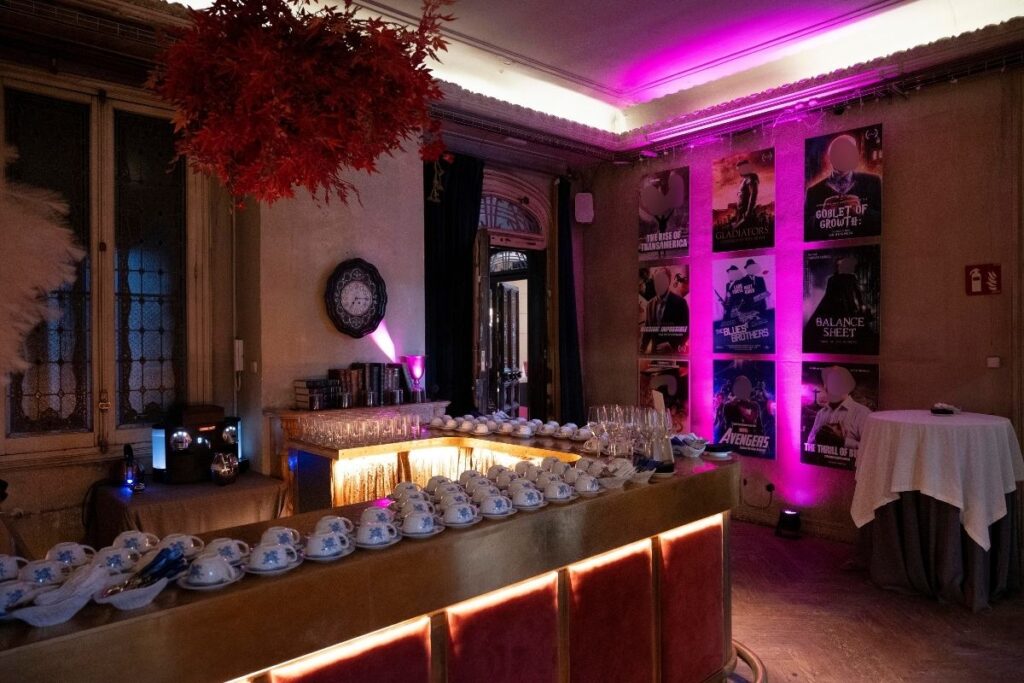
A financial services firm wants to host forty key accounts for three days. Every meal and every venue needs a genuine sense of occasion. This is where Madrid tends to lead the shortlist. Its five-star hotel base, fine-dining scene and cultural landmarks give a client trip the weight it needs. The city’s international profile also reassures guests travelling from outside Europe.
The leadership offsite that wants something different
A pharmaceutical company has already run incentive trips in Barcelona and Madrid for previous cohorts. This year’s senior leadership group wants somewhere none of them has visited. Bilbao and San Sebastián answer that brief well. The design-forward identity built around landmarks like the Guggenheim Museum helps. So does a food culture that regularly tops European rankings. Together, they give a smaller, senior group a programme that feels genuinely new.
The milestone anniversary trip
A retail group is marking its fifteenth anniversary and wants to reward eighty long-serving staff with something that feels like a genuine celebration, not a standard offsite. Budget is generous, and the brief specifically asks for a five-star feel without a big-city pace. Mallorca fits well here. The island offers hotel buyouts, a beach club gala evening, and a slower rhythm across the programme that suits a milestone occasion rather than a working trip. The shorter flight radius outside peak summer is worth planning around, so the team locks in an early autumn date while the weather still holds.
What an Incentive Travel Spain Programme Looks Like
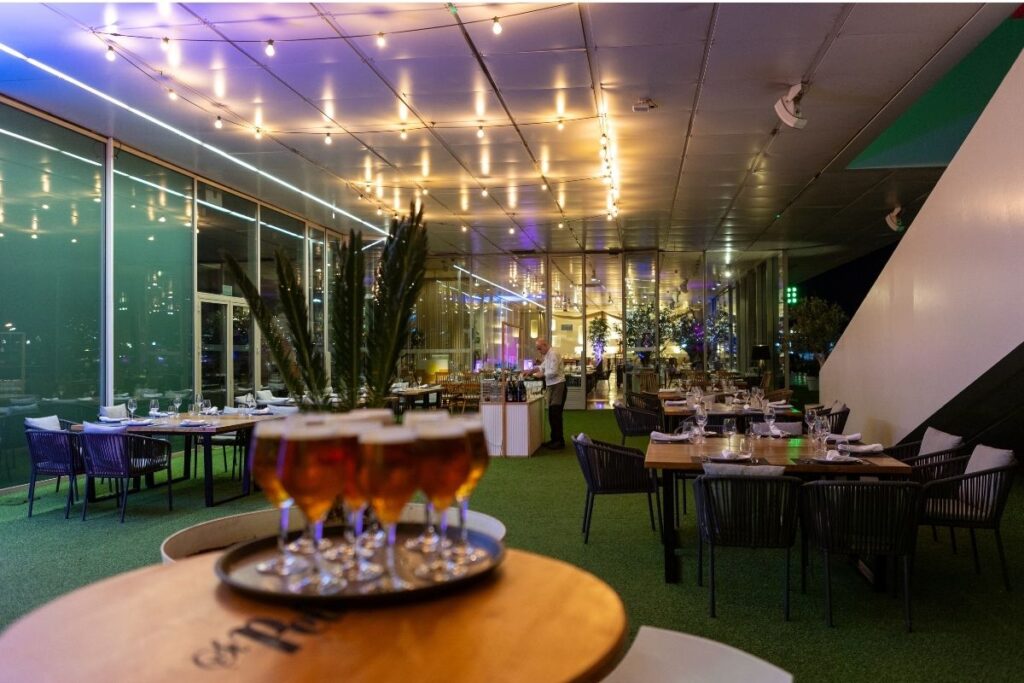
It helps to see a scenario translated into an actual schedule. Here is a simplified three-day snapshot for a client hospitality trip to Valencia.
| Day | Daytime | Evening |
| 1 | Private arrivals, hotel check-in, guided bike tour through the historic centre and the City of Arts and Sciences area | Welcome dinner at a private dining room in a landmark building |
| 2 | Private Ferrari driving experience in the morning, followed by a paella show-cooking lunch, free afternoon or optional golf | Gala dinner with live Spanish entertainment |
| 3 | Relaxed brunch, closing remarks, private departures |
The same structure scales up or down. A twenty-five person Barcelona reward trip follows a similar shape, with more open social time and fewer formal moments. A Bilbao leadership offsite typically trades one formal dinner for a design or gastronomy-focused experience instead.
What Every Incentive Travel Spain Programme Needs
Region shapes the character of a trip. These practicalities shape whether it actually runs smoothly, and they apply no matter which region you land on.
- Budget: most programmes run from a few hundred to several thousand euros per person per day. Hotel category, season and how exclusive the experiences are drive most of that range. Research from the Incentive Research Foundation found that among top-performing companies, the average sales incentive trip is valued at nearly 4,000 US dollars per person, with top-tier trips exceeding 8,600 US dollars.
- Group size: under thirty people keeps almost every option open, including private villas and full restaurant buyouts. Above one hundred, hotel room count and venue capacity become the limiting factor.
- Transport: corporate groups move between the airport, hotel and activities in private coaches or chauffeured vehicles. It is arranged as a group and scheduled around the whole programme.
- Lead time: six to nine months is comfortable for most groups. Larger programmes, or anything planned around peak season, benefit from nine to twelve months.
- Local supplier network: every hotel, venue and activity partner comes from a network of more than 500 vetted suppliers. It was built over more than twenty years, not sourced from a directory the week before your event.
- Sustainability: certified hotels, seasonal local catering and a give-back activity such as a beach clean can all be built in. None of it needs to change the experience your group is expecting. Our approach to sustainable event management covers this further.
- Safety and duty of care: a proper incentive programme includes a risk assessment, local emergency contacts and a clear escalation plan for every venue and activity. This matters more as group size grows, and it is something a local DMC handles as standard rather than as an add-on.
Frequently Asked Questions
How do we choose a region for incentive travel Spain?
Start with what the trip needs to achieve, rather than which city sounds most appealing on paper. A fast, energetic reward trip usually points to Barcelona or the islands. Trips built around impressing clients usually point to Madrid. A repeat group wanting something new usually points north to the Basque Country, or south to Andalucía. If your group has never travelled to Spain before, almost any of these regions will work well, so group size and budget become the deciding factors instead.
How much does incentive travel in Spain cost per person?
Most corporate programmes fall between a few hundred and several thousand euros per person per day. Season, hotel category and how exclusive the chosen experiences are matter more than the destination itself. A four-star programme in shoulder season will cost noticeably less than a five-star peak-summer trip in the same city, even before flights and extras are added.
Can one programme combine two regions?
Yes. Combining a city stay with a coastal or island extension is common for groups of five days or longer. It lets you offer a business-ready base and a genuine reward element within the same trip. Barcelona paired with a Costa Brava extension, or Madrid paired with a short Andalucía add-on, are both realistic combinations we plan regularly.
Do we need a destination management company, or can we book everything ourselves?
You can book independently. Most companies find that local contracting power, an established supplier network and on-site coordination save time and reduce risk. A DMC also carries the local knowledge needed to avoid mistakes that only show up once you are on the ground, from permit requirements at certain venues to which restaurants can genuinely handle a group of one hundred without the service falling apart. Our guide to what a DMC actually does covers this in more detail. This is exactly the gap Crossover fills for incentive travel Spain programmes.
Is Spain a good fit for large groups?
Yes, particularly Madrid and Barcelona. Both have enough five-star hotel inventory and large-format venues to host groups of several hundred without splitting across properties. Beyond around three hundred people, plan further ahead and expect fewer venue options, since only a handful of properties in any city can comfortably hold a group that size in one place.
What is the best time of year to run an incentive trip in Spain?
Late spring and early autumn work well almost everywhere in Spain: warm enough for outdoor events, without the peak-summer heat or hotel rates. Madrid and the Basque Country also handle spring and autumn comfortably. The islands and the coast are more weather-dependent, and are best kept to the May-to-September window unless your programme is built entirely around indoor venues.
Start Planning Your Incentive Travel Spain Programme
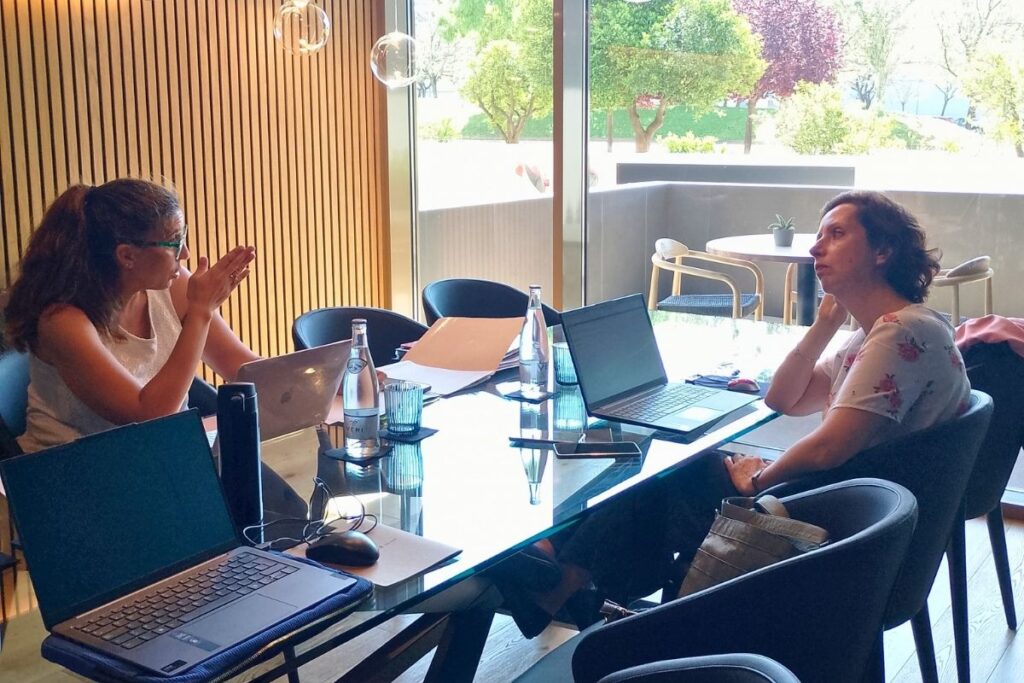
Every programme we design starts with your brief, not a fixed package. Whether your group looks like one of the four scenarios above or sits somewhere in between, the process is the same. Contact us and tell us your group size, rough dates and budget. We will create together a bespoke proposal for your next incentive event in Spain.